
Introductie en historie Mercedes-Benz W201 (190E / 190D)
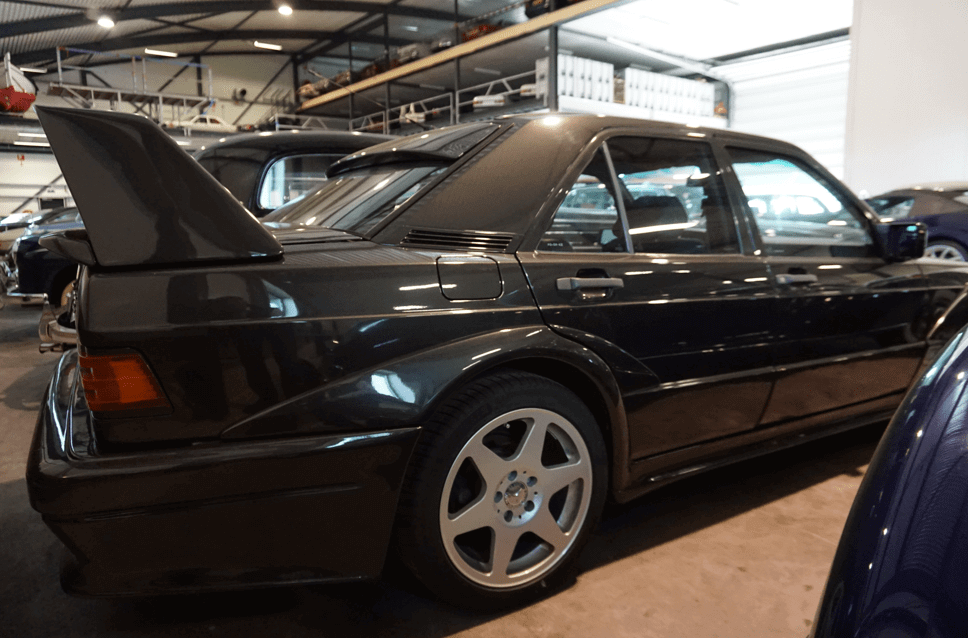
Introduction and History: Mercedes-Benz W201 (190E / 190D)
In December 1982, Mercedes-Benz introduced the W201 series, better known as the 190 series. This model marked a significant milestone in Mercedes-Benz history: it was the brand’s first compact executive car, positioned below the larger E-Class and S-Class to open up a new market segment. Internally, it was often referred to as the “Baby Benz”.
Development
Development of the W201 began already in the 1970s. Mercedes aimed to build a smaller vehicle that met its high standards for quality, safety, comfort, and reliability. Under the leadership of chief engineer Prof. Dr. Werner Breitschwerdt, the project resulted in a car that incorporated several innovative technologies for its time.
Engineering and Design
Body Structure: The W201 featured a newly developed body with advanced safety engineering, including carefully designed crumple zones and a rigid passenger cell.
Suspension: It introduced the multi-link rear axle, a sophisticated five-arm rear suspension system that offered excellent ride comfort and handling. This suspension design became standard in future Mercedes models.
Aerodynamics: With a drag coefficient of 0.33, the 190 was exceptionally aerodynamic for its time.
Engines and Variants
The 190 debuted with a 2.0-liter gasoline engine with a carburetor.
Soon after, more powerful versions were introduced, including the 190E with fuel-injected engines and the fuel-efficient 190D diesel models.
Particularly notable were the 190E 2.3-16 and 2.5-16 with Cosworth cylinder heads — high-performance variants that enjoyed success in motorsport, especially DTM racing.
Over the years, the W201 lineup expanded to include engines ranging from 1.8 to 2.6 liters for gasoline, and 2.0 to 2.5 liters for diesel, with both naturally aspirated and turbocharged variants.
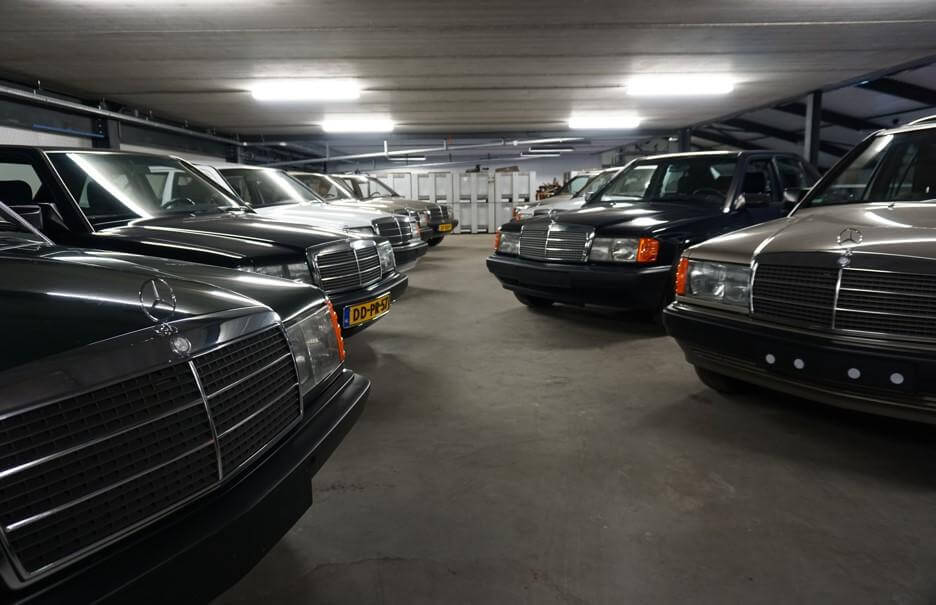
Market Position and Impact
The W201 was not only technically advanced but also a commercial success. Over 1.8 million units were produced between 1982 and 1993. The 190 laid the foundation for the later C-Class, which replaced it in 1993.
Key Characteristics
Exceptional durability (many 190s are still running today)
Refined ride comfort and driving stability
Excellent build quality
Classic, timeless design by Bruno Sacco
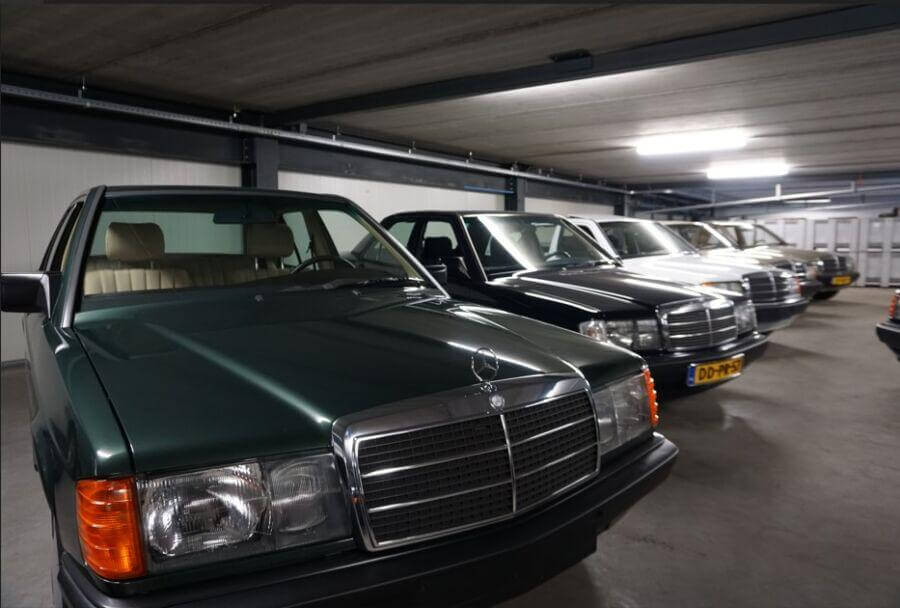
Summary Table
| Model | Engine | Displacement | Power | Production Years |
|---|---|---|---|---|
| 190 | M102.921 | 2.0 L carburetor | 90 hp | 1982–1988 |
| 190E 1.8 | M102.910 | 1.8 L injection | 109 hp | 1989–1993 |
| 190E 2.0 | M102.962 | 2.0 L injection | 118–122 hp | 1982–1993 |
| 190E 2.3 | M102.985 | 2.3 L injection | 136 hp | 1983–1988 |
| 190E 2.6 | M103.940 | 2.6 L inline-6 | 160 hp | 1986–1993 |
| 190D 2.0 | OM601.911 | 2.0 L diesel | 72 hp | 1982–1989 |
| 190D 2.2 (USA) | OM601.921 | 2.2 L diesel | 72 hp | 1984–1986 |
| 190D 2.5 | OM602.911 | 2.5 L diesel | 90 hp | 1985–1993 |
| 190D 2.5 Turbo | OM602.961 | 2.5 L turbo diesel | 122 hp | 1986–1993 |
| 190E 2.3-16 | M102.983 | 2.3 L 16V | 185 hp | 1984–1988 |
| 190E 2.5-16 | M102.990 | 2.5 L 16V | 195–204 hp | 1987–1990 |
| 190E Evo I | M102.990 | 2.5 L 16V | 195 hp | 1990 |
| 190E Evo II | M102.992 | 2.5 L 16V | 235 hp | 1990–1991 |

Rare Colors and Options
Special paints (Almandine Red, Bornite, Blue-Black Metallic).
Exclusive leather and fabric interiors.
Uncommon factory options like:
Solar-powered sunroof ventilation.
Cruise control (Tempomat).
Limited-slip differential.
Climate control (rare on early models).
Exclusive leather packages.
Summary Table: Rarity Levels
| Model | Production | Rarity Level |
|---|---|---|
| Evolution II | 502 units | Extremely rare |
| Evolution I | 502 units | Very rare |
| 2.5-16 | ~5,743 units | Rare |
| 2.3-16 | ~19,487 units | Collectible |
| 190D 2.5 Turbo | limited | Scarce |
| US Versions | limited | Regionally rare |

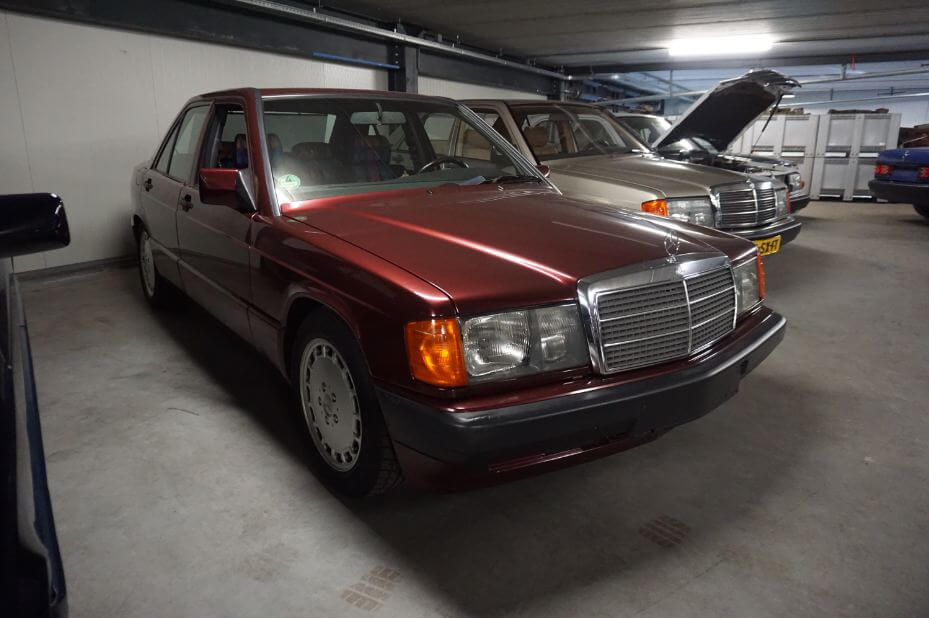
Rare and Collectible Variants
1️⃣ 190E 2.5-16 Evolution I (1990)
Production: 502 units (DTM homologation).
Engine: 2.5-16 M102.990, 195 hp.
Features: aerodynamic body kit, stiffer suspension, lightweight materials, sport interior.
Highly collectible today.
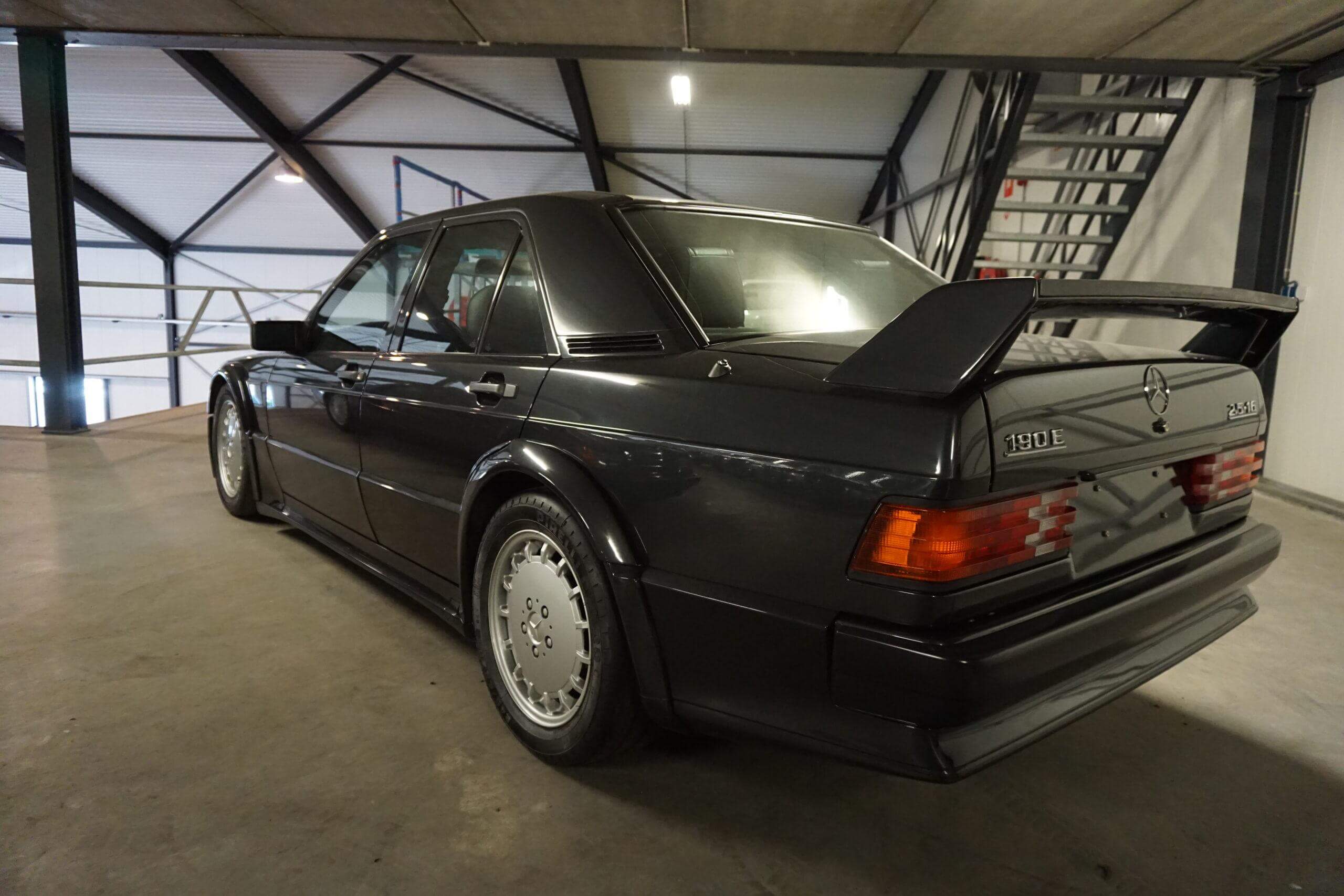
2️⃣ 190E 2.5-16 Evolution II (1990–1991)
Production: 502 units.
Engine: 2.5-16 M102.992, 235 hp.
Features: large adjustable rear wing, extreme aero kit, 17″ wheels.
Built for DTM competition — among the most desirable modern classics.